When Development Becomes the Peace Accord
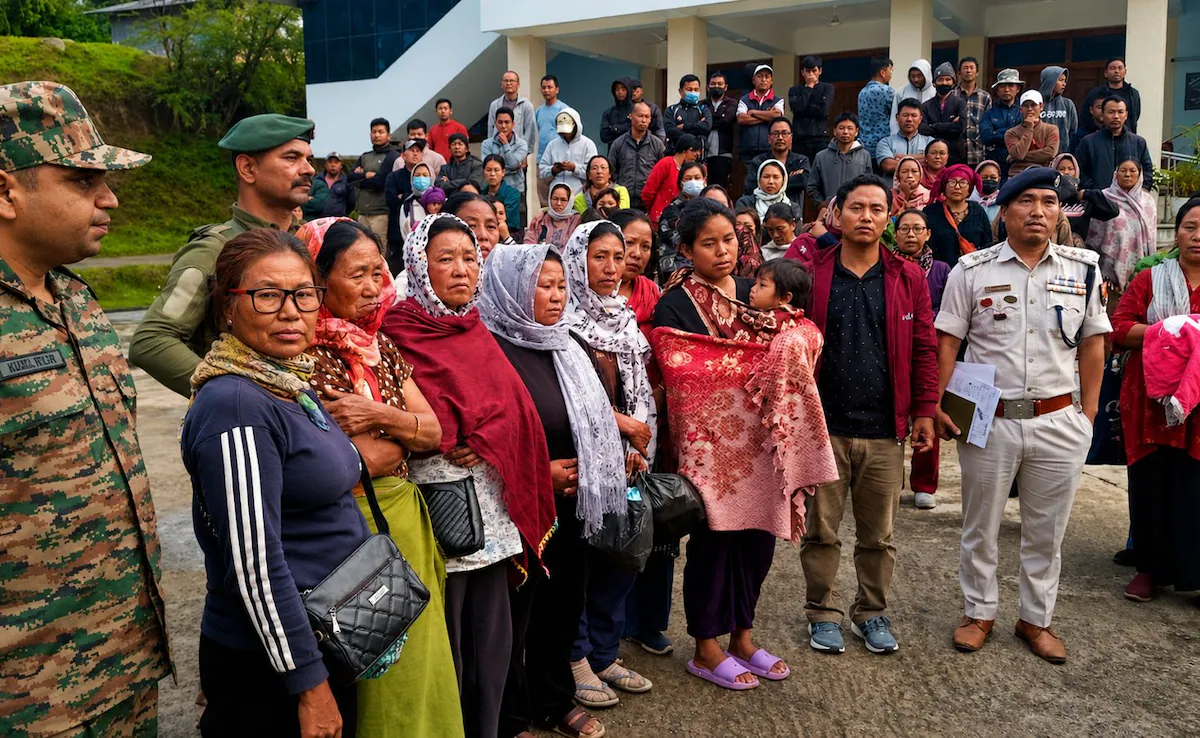
On April 30, 2026, 43 cadres of the Hmar People's Convention- Democratic walked into a ceremony near Aizawl and laid down their arms. It was a quiet event for a historic one. With that surrender, Mizoram was declared fully insurgency-free, every armed group in the state either dissolved or absorbed into the constitutional mainstream. Chief Minister Lalduhoma, who had once left the Indian Police Service to work for peace, called it the realisation of a lifelong goal. "Now, with a peaceful heart, we can proudly say Mizoram is a truly peaceful state," he said. What finally convinced the HPC-D to choose dialogue over defiance? Significantly, their own commander pointed not to military pressure but to roads and bridges. The Unity Bridge over the Tuivai River, improved connectivity to Hmar-majority areas: these were cited as proof that the government was serious about the region's future. It is a telling detail. In the North-East, development has not merely followed peace. It has produced it.
Development as the Driver of Peace
This logic has played out across the region over the past decade. The Bodo Peace Accord of 2020, the Karbi Anglong Agreement of 2021, the Tripura Peace Accord of 2024 each came packaged with genuine powers, real resources, and tangible projects. Surrendering was made not just honourable but worthwhile. More than 8,000 militants have come through rehabilitation since 2014. Insurgency incidents across the region have fallen by 80 per cent since 2014. The rollback of the Armed Forces Special Powers Act has tracked this progress. Tripura exited AFSPA in 2015, Meghalaya in 2018, with further reductions across Assam and Arunachal Pradesh. Each withdrawal signals to investors and young people that this region is open for normal life.
The Infrastructure Revolution
The most visible engine of this transformation is infrastructure and the scale of what has been built in a decade is staggering. Nearly 10,000 km of national highways have been constructed across the eight states since 2014at a cost of over Rs 1.07 lakh crore, with a further 5,000 km under active construction. The railway budget allocation for the region has increased fivefold to over Rs 62,000 crore. Ninety air routes have been operationalised under the UDAN scheme, connecting 12 airports and helipads across the region. The projects currently under way read like an engineering manifesto. The Jiribam-Imphal railway, featuring the world's tallest railway bridge at 141 metres, will cut the journey between Jiribam and Imphal from twelve hours to two and a half. The Dhubri-Phulbari Bridge, under construction across the Brahmaputra, will be India's longest river bridge. India's first international multimodal logistics park at Jogighopa in Assam, integrating waterways, roads, railways, and air networks into a single hub, is now operational.
A Region Investors Are Discovering
Peace and connectivity have unlocked capital. The Rising Northeast Investors Summit of May 2025 drew delegates from over 80 countries and recorded Rs 4.3 lakh crore in investment interest across energy, agro- processing, tourism, IT, healthcare, and logistics. Organic farming, powered by the region's exceptional biodiversity and the Mission Organic Value Chain Development scheme, is emerging as a global opportunity. India's trade with ASEAN, for which the North-East is the natural gateway, stands at $125 billion and is projected to exceed $200 billion. The human returns are equally striking. Mizoram became India's first fully literate state in May 2025. Assam is building South Asia's largest cancer care network, with eight hospitals already operational and seven more under construction. The Moidam mounds of Assam's Ahom dynasty were inscribed as a UNESCO World Heritage Site in 2024. In several respects, the North- East is no longer catching up with the rest of India. It is showing the way.
The Lesson in Those 43 Rifles
When the HPC-D cadres laid down their arms, their commander spoke of bridges and roads. Not amnesties, not negotiations: infrastructure. That is the North-East's most important lesson for any conflict-affected region. Sustained, visible development is not the reward for peace. It is the reason. for it.
The eight states still have journeys ahead. But the direction is settled and the momentum is real. A region once described in terms of what it lacked is now being defined by what it is building. That is not just progress. It is transformation.
Development as the Driver of Peace
This logic has played out across the region over the past decade. The Bodo Peace Accord of 2020, the Karbi Anglong Agreement of 2021, the Tripura Peace Accord of 2024 each came packaged with genuine powers, real resources, and tangible projects. Surrendering was made not just honourable but worthwhile. More than 8,000 militants have come through rehabilitation since 2014. Insurgency incidents across the region have fallen by 80 per cent since 2014. The rollback of the Armed Forces Special Powers Act has tracked this progress. Tripura exited AFSPA in 2015, Meghalaya in 2018, with further reductions across Assam and Arunachal Pradesh. Each withdrawal signals to investors and young people that this region is open for normal life.
The Infrastructure Revolution
The most visible engine of this transformation is infrastructure and the scale of what has been built in a decade is staggering. Nearly 10,000 km of national highways have been constructed across the eight states since 2014at a cost of over Rs 1.07 lakh crore, with a further 5,000 km under active construction. The railway budget allocation for the region has increased fivefold to over Rs 62,000 crore. Ninety air routes have been operationalised under the UDAN scheme, connecting 12 airports and helipads across the region. The projects currently under way read like an engineering manifesto. The Jiribam-Imphal railway, featuring the world's tallest railway bridge at 141 metres, will cut the journey between Jiribam and Imphal from twelve hours to two and a half. The Dhubri-Phulbari Bridge, under construction across the Brahmaputra, will be India's longest river bridge. India's first international multimodal logistics park at Jogighopa in Assam, integrating waterways, roads, railways, and air networks into a single hub, is now operational.
A Region Investors Are Discovering
Peace and connectivity have unlocked capital. The Rising Northeast Investors Summit of May 2025 drew delegates from over 80 countries and recorded Rs 4.3 lakh crore in investment interest across energy, agro- processing, tourism, IT, healthcare, and logistics. Organic farming, powered by the region's exceptional biodiversity and the Mission Organic Value Chain Development scheme, is emerging as a global opportunity. India's trade with ASEAN, for which the North-East is the natural gateway, stands at $125 billion and is projected to exceed $200 billion. The human returns are equally striking. Mizoram became India's first fully literate state in May 2025. Assam is building South Asia's largest cancer care network, with eight hospitals already operational and seven more under construction. The Moidam mounds of Assam's Ahom dynasty were inscribed as a UNESCO World Heritage Site in 2024. In several respects, the North- East is no longer catching up with the rest of India. It is showing the way.
The Lesson in Those 43 Rifles
When the HPC-D cadres laid down their arms, their commander spoke of bridges and roads. Not amnesties, not negotiations: infrastructure. That is the North-East's most important lesson for any conflict-affected region. Sustained, visible development is not the reward for peace. It is the reason. for it.
The eight states still have journeys ahead. But the direction is settled and the momentum is real. A region once described in terms of what it lacked is now being defined by what it is building. That is not just progress. It is transformation.