Fresh Violence Returns to Manipur Border Areas as Villages Burn and Fear Deepens
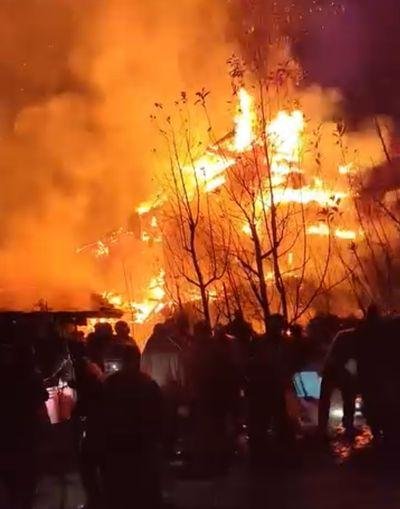
Fresh violence has once again erupted along Manipur’s sensitive Indo–Myanmar border areas, particularly in the villages of Wanglee, Choro, and Namlee in Kamjong district. Reports from the ground describe heavy firing, arson attacks, explosions, and mass panic among civilians, forcing villagers to flee into forests and nearby hills for safety.
According to local reports, the attacks began during the early hours of May 7, when armed militants allegedly crossed from the Myanmar side and launched coordinated assaults on border settlements. Villagers claimed that automatic weapons, explosives, and even drone-assisted attacks were used during the operation. Several houses, market structures, and warehouses were reportedly burned down in the violence.
Videos circulating online showed thick smoke rising from the hills as terrified residents, including women and children, escaped carrying whatever belongings they could save. A woman was reportedly injured by gunfire during the attack. More than twenty houses were allegedly destroyed in Choro village alone.
The attacks have now expanded the already fragile conflict environment in Manipur. What was earlier seen mainly as Meitei–Kuki violence has increasingly spread into Naga-inhabited border regions. Tensions further intensified after the killing of three Thadou church leaders near the Kotzim–Kotlen area in Kangpokpi district. The church leaders were reportedly returning from a religious gathering when unidentified armed men ambushed their vehicles. Several others were injured in the attack.
Following these killings, reports emerged of retaliatory tensions, abductions, and hostage-like situations involving civilians in remote hill areas. Villagers from different communities reportedly became trapped between armed groups, road blockades, and fear of retaliation. Many residents described the atmosphere as one of complete insecurity, where ordinary civilians no longer trust that the administration can protect them.
The hostage crisis reportedly developed after armed groups began detaining civilians suspected of supporting rival communities or militant factions. Fear spread rapidly across villages because movement through remote roads became extremely dangerous. Families searching for missing relatives were forced to rely on community networks rather than state authorities. In several areas, villagers reportedly organized their own defense groups because security forces either arrived late or failed to reach the affected zones quickly due to terrain and operational limitations.
This continuing violence has raised serious questions about the role of both the Manipur Government and the Central Government. Although statements condemning the attacks were issued by officials, many citizens feel that official responses remain limited to reactions after violence has already taken place.
Critics argue that if villages can be attacked repeatedly, houses burned, civilians displaced, and armed groups move across border regions despite heavy deployment of security agencies, then the government machinery is clearly failing to restore confidence among the people. Questions are also being raised over border security failures and intelligence lapses.
Many people in Manipur now openly ask:
Why are civilians still left vulnerable after years of conflict?
Why are armed attacks continuing despite the presence of central forces?
Why do villages continue burning before meaningful intervention arrives?
Why are communities increasingly forced to depend on ethnic defense systems instead of constitutional protection?
Civil society groups and local organizations have warned that the conflict is becoming more dangerous because it is no longer confined to one ethnic line. The expansion of violence into border Naga areas and the repeated attacks on villages risk creating wider instability across the hill districts.
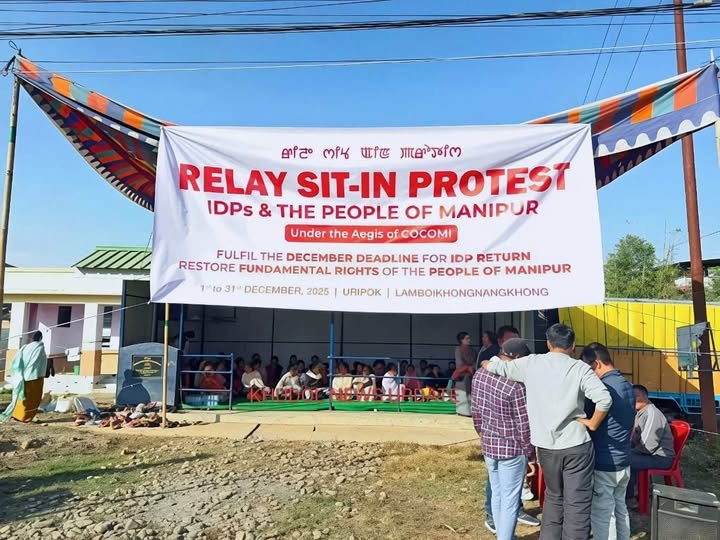
The humanitarian impact is also growing rapidly. Families have lost homes, markets have been destroyed, students have again seen disruptions to education, and displaced villagers now face uncertainty about survival and rehabilitation. Relief organizations and student groups have already started distributing emergency aid to affected villages after the recent attacks.
For many residents of Manipur, the deeper fear is that the state is slowly entering a condition where violence becomes normalized while political leadership appears unable to provide a long-term solution. The continued firing, burning of villages, ambushes, and hostage tensions have left many citizens questioning whether peace efforts are truly being prioritized or whether the crisis is simply being managed without resolving its root causes
According to local reports, the attacks began during the early hours of May 7, when armed militants allegedly crossed from the Myanmar side and launched coordinated assaults on border settlements. Villagers claimed that automatic weapons, explosives, and even drone-assisted attacks were used during the operation. Several houses, market structures, and warehouses were reportedly burned down in the violence.
Videos circulating online showed thick smoke rising from the hills as terrified residents, including women and children, escaped carrying whatever belongings they could save. A woman was reportedly injured by gunfire during the attack. More than twenty houses were allegedly destroyed in Choro village alone.
The attacks have now expanded the already fragile conflict environment in Manipur. What was earlier seen mainly as Meitei–Kuki violence has increasingly spread into Naga-inhabited border regions. Tensions further intensified after the killing of three Thadou church leaders near the Kotzim–Kotlen area in Kangpokpi district. The church leaders were reportedly returning from a religious gathering when unidentified armed men ambushed their vehicles. Several others were injured in the attack.
Following these killings, reports emerged of retaliatory tensions, abductions, and hostage-like situations involving civilians in remote hill areas. Villagers from different communities reportedly became trapped between armed groups, road blockades, and fear of retaliation. Many residents described the atmosphere as one of complete insecurity, where ordinary civilians no longer trust that the administration can protect them.
The hostage crisis reportedly developed after armed groups began detaining civilians suspected of supporting rival communities or militant factions. Fear spread rapidly across villages because movement through remote roads became extremely dangerous. Families searching for missing relatives were forced to rely on community networks rather than state authorities. In several areas, villagers reportedly organized their own defense groups because security forces either arrived late or failed to reach the affected zones quickly due to terrain and operational limitations.
This continuing violence has raised serious questions about the role of both the Manipur Government and the Central Government. Although statements condemning the attacks were issued by officials, many citizens feel that official responses remain limited to reactions after violence has already taken place.
Critics argue that if villages can be attacked repeatedly, houses burned, civilians displaced, and armed groups move across border regions despite heavy deployment of security agencies, then the government machinery is clearly failing to restore confidence among the people. Questions are also being raised over border security failures and intelligence lapses.
Many people in Manipur now openly ask:
Why are civilians still left vulnerable after years of conflict?
Why are armed attacks continuing despite the presence of central forces?
Why do villages continue burning before meaningful intervention arrives?
Why are communities increasingly forced to depend on ethnic defense systems instead of constitutional protection?
Civil society groups and local organizations have warned that the conflict is becoming more dangerous because it is no longer confined to one ethnic line. The expansion of violence into border Naga areas and the repeated attacks on villages risk creating wider instability across the hill districts.
The humanitarian impact is also growing rapidly. Families have lost homes, markets have been destroyed, students have again seen disruptions to education, and displaced villagers now face uncertainty about survival and rehabilitation. Relief organizations and student groups have already started distributing emergency aid to affected villages after the recent attacks.
For many residents of Manipur, the deeper fear is that the state is slowly entering a condition where violence becomes normalized while political leadership appears unable to provide a long-term solution. The continued firing, burning of villages, ambushes, and hostage tensions have left many citizens questioning whether peace efforts are truly being prioritized or whether the crisis is simply being managed without resolving its root causes