A New Chapter for Bangladesh: The Return of a Political Scion and What It Means for the Nation
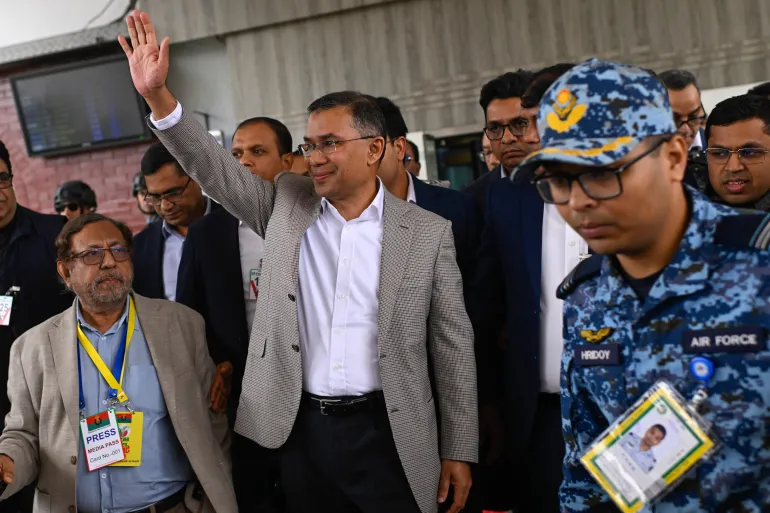
The political terrain of Bangladesh entered a new chapter this week as Tarique Rahman, the long-time BNP acting chairman and prominent opposition figure, set foot in his homeland after 17 years in exile. His return, widely covered by international media and attended by vast crowds of supporters, carries profound implications for the country’s February 2026 general election and the trajectory of democratic governance.
Rahman, 60, is the eldest son of former Bangladesh Prime Minister Khaleda Zia and a central figure in the BNP. He left Bangladesh in 2008 amid a wave of legal challenges and political pressure, citing health concerns and political persecution. During his time abroad, he continued to steer the BNP’s strategic direction, becoming one of the most polarizing figures in the nation’s political narrative.
The timing of Rahman’s return is critical. Bangladesh is currently overseen by an interim government led by Nobel laureate Muhammad Yunus, after mass protests earlier this year forced the resignation of former Prime Minister Sheikh Hasina. Former ruling structures have been dismantled or reshaped, and the BNP has reasserted itself as a major political force. The elections next February are viewed as a potential reset for Bangladesh’s democratic institutions.
International media outlets, including BBC and Reuters, highlighted Rahman as a front-runner for the prime minister ship, noting the enthusiasm of supporters and the momentum the BNP has gained since his announcement to return. His entrance into Dhaka was ceremonious; Rahman disembarked barefoot to symbolically touch the soil of his country and later addressed tens of thousands of party faithful at a public rally.
In his speeches, Rahman has articulated a vision for a Bangladesh that prioritizes safety, unity, and democratic renewal. He underscored the importance of co-existence among Bangladesh’s multi-religious communities and appealed for collective engagement in the nation’s political and economic development.
Yet, the path ahead is not without challenges. The exclusion of the Awami League from the electoral process has raised questions about competitive balance, while tensions among various political factions suggest that the upcoming polls could be contentious. Observers have cautioned that credible electoral outcomes will require transparent oversight and broad participation from all stakeholders.
For many Bangladeshis, however, Rahman’s return means hope for renewed political engagement and a potential shift from the entrenched rivalries that have defined national politics for decades. Whether this moment heralds sustainable democratic reform or intensifies existing divisions will be among the defining questions of the 2026 election cycle.
Rahman, 60, is the eldest son of former Bangladesh Prime Minister Khaleda Zia and a central figure in the BNP. He left Bangladesh in 2008 amid a wave of legal challenges and political pressure, citing health concerns and political persecution. During his time abroad, he continued to steer the BNP’s strategic direction, becoming one of the most polarizing figures in the nation’s political narrative.
The timing of Rahman’s return is critical. Bangladesh is currently overseen by an interim government led by Nobel laureate Muhammad Yunus, after mass protests earlier this year forced the resignation of former Prime Minister Sheikh Hasina. Former ruling structures have been dismantled or reshaped, and the BNP has reasserted itself as a major political force. The elections next February are viewed as a potential reset for Bangladesh’s democratic institutions.
International media outlets, including BBC and Reuters, highlighted Rahman as a front-runner for the prime minister ship, noting the enthusiasm of supporters and the momentum the BNP has gained since his announcement to return. His entrance into Dhaka was ceremonious; Rahman disembarked barefoot to symbolically touch the soil of his country and later addressed tens of thousands of party faithful at a public rally.
In his speeches, Rahman has articulated a vision for a Bangladesh that prioritizes safety, unity, and democratic renewal. He underscored the importance of co-existence among Bangladesh’s multi-religious communities and appealed for collective engagement in the nation’s political and economic development.
Yet, the path ahead is not without challenges. The exclusion of the Awami League from the electoral process has raised questions about competitive balance, while tensions among various political factions suggest that the upcoming polls could be contentious. Observers have cautioned that credible electoral outcomes will require transparent oversight and broad participation from all stakeholders.
For many Bangladeshis, however, Rahman’s return means hope for renewed political engagement and a potential shift from the entrenched rivalries that have defined national politics for decades. Whether this moment heralds sustainable democratic reform or intensifies existing divisions will be among the defining questions of the 2026 election cycle.